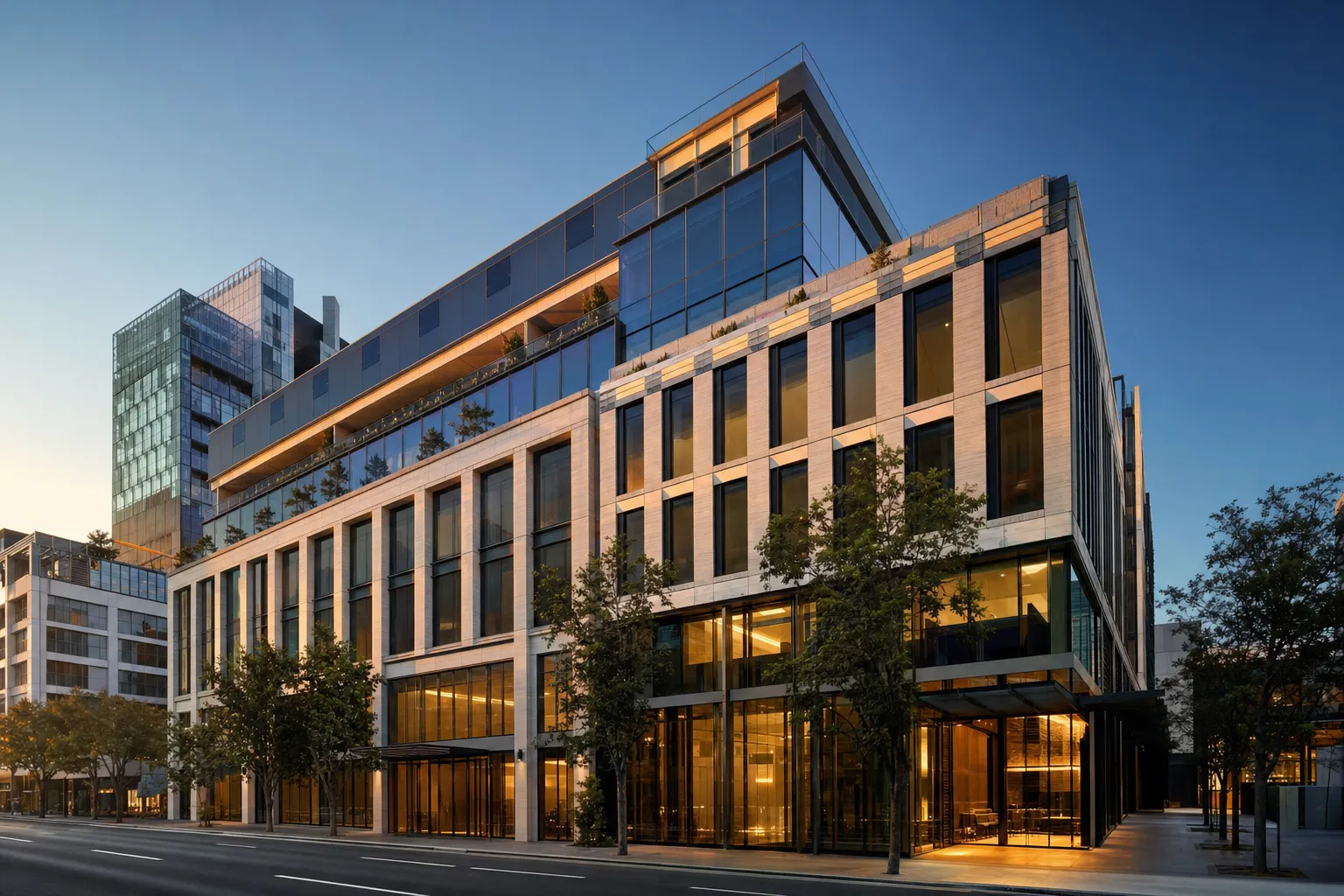
Commercial property loans for owner-occupiers and investors
Longer-term finance for businesses buying their premises and for property investors, across office, retail, industrial and large mixed-use commercial properties.
A commercial property loan funds the purchase or development of non-residential or large mixed-use commercial properties. Unlike residential lending, it is underwritten on the trading position of the business buying its premises, or on the yield and tenant covenant where the property is an investment. The interest rate and the loan terms flex with the security, the business and the purpose, so two deals on similar commercial properties can price very differently.
Windsor Finance is a broker, not a lender. We hold no own capital and approve nothing. We place owner-occupier and investment cases across a panel of banks and non-bank lenders, then match the lending options to your situation rather than fitting you to one product. Commercial property finance is generally business-purpose lending, outside the National Consumer Credit Protection Act 2009 on a signed business-purpose declaration, and every fee is disclosed in writing before you commit.
Key facts
- Indicative cost ~6 to 9% p.a.; a strong covenant and a low LVR sit at the lower end
- LVR up to around 70 to 75% for owner-occupiers, 65 to 70% for investment, lower for specialised assets
- Offer typically in 2 to 4 weeks, settlement in 4 to 8 weeks end to end
| Scenario | Indicative rate | LVR |
|---|---|---|
| Owner-occupier | ~6-8% p.a.* | ~70-75% |
| Commercial investment | ~6.5-9% p.a.* | ~65-70% |
| Specialised security | By case* | Lower |
Cost calculator
How commercial property lending works
A commercial property facility is secured by a first mortgage over the premises and structured around what the property does for you. An owner-occupier facility funds a trading business buying the building it operates from, assessed on its profit, its serviceability and the rent it currently pays. An investment facility funds property let to tenants and is assessed on the rental income, the lease length and the tenant covenant. The lender sets how much you can borrow by applying an LVR to the lower of price or valuation, then tests serviceability against its buffer. Terms run 3 to 25 years, often with an interest-only period on investment deals, and the repayment comes from business cash flow or rent. Whether you are looking to purchase, refinance commercial property or fund an acquisition, we tailor the facility to your particular objectives.
Deposit, LVR and how much you can borrow
The deposit on commercial properties is larger than on a home, because lenders hold more capital against this lending. Indicatively, an owner-occupier borrows up to around 70 to 75% of value, a 25 to 30% deposit; an investor up to around 65 to 70%, a 30 to 35% deposit; specialised security such as a service station, a warehouse, a pub or a childcare centre sits lower again. Where the going-concern business is strong, some lenders weigh the trading covenant and your business assets as well as the bricks, which can lift the figure. The deposit can come from cash or from equity released against another property you already own. A business owner with strong assets but lumpy income can still qualify through alt-doc evidence, an accountant letter and business statements.
Commercial interest rates and loan terms
Commercial lending prices above residential, because the security is less liquid and the risk is read on the business as much as the bricks. Indicatively, the interest rate runs around 6% to 9% per annum: a strong covenant, a low LVR and a clean tenant sit at the lower end; a specialised asset or a thinner covenant prices higher. A variable interest rate or a fixed rate is available, and pricing can vary based on the lender, the asset and the loan size. The rate, the loan terms and the fees are confirmed on application once the lender sees the property and the business; fees and charges apply on top, including an establishment fee, a valuation fee, legal costs and, on many facilities, an annual line fee. Terms run 3 to 25 years, with an interest-only period common on investment deals. We compare the market across the panel so the structure matches your repayments, not just the headline rate.
How to apply and what a lender checks
When you apply for a commercial facility, a lender wants to understand the property and the borrower together. It checks the lease and the details of the property, the financial situation of the business through tax returns, BAS and bank statements, an assets and liabilities position, and the deposit or equity you bring; income verification follows the eligibility criteria for the chosen lender. As a specialist commercial broker, not a bank, we package the application so an experienced commercial lender among the panel sees a clean, complete case first time, which is the fastest route to a yes and the surest way to avoid the cost of a decline and a re-shop. A commercial loan can help a business buy its premises, expand your business, move onto a better structure, or unlock equity for the next commercial property purchase. Get in touch and our dedicated team will tailor the options to your finance requirements.
A commercial loan vs a residential loan
Commercial and residential lending look similar but underwrite differently. One reads the business and the tenant; the other reads the individual and the home.
Commercial premises
- Secures office, retail, industrial and large mixed-use premises
- Assessed on trading position, rent and tenant covenant
- Larger deposit, typically 25 to 35% of value
- Terms of 3 to 25 years, interest-only common on investment
- Generally business-purpose, outside the NCCP Act
Residential property
- Secures a house or unit you live in or rent out
- Assessed on personal income and serviceability
- Smaller deposit, often 5 to 20% of value with LMI
- Terms up to 30 years on principal and interest
- Consumer lending regulated under the NCCP Act
Where commercial property loans fit
A trading business buying the property it operates from instead of paying rent.
Office, retail and industrial property let to tenants on a lease.
Assets that combine commercial floorspace with residential above.
The questions buyers ask first
How much deposit do I need? +
Is it harder to borrow against commercial property? +
A bank declined the deal. Is that the end? +
Can the facility cover more than the building? +
Common questions
Owner-occupier vs investment, what is the difference? +
Is this regulated lending? +
What interest rate will I pay? +
What can a commercial facility be used for? +
Do I get a fixed structure or a choice? +
How long does it take? +
Explore the commercial finance hub
Investment property loans
Residential and commercial investment lending structured across personal, company and trust entities.
Read more →Development finance
Fund a commercial or mixed-use scheme through the build before it reaches a term facility.
Read more →SMSF property lending
Hold commercial property inside a self-managed super fund under a compliant LRBA.
Read more →Read the guides
Plain-English guides that sit under this hub. The wider finance guides hub links to every guide we publish.
Get indicative commercial terms in 2 to 4 weeks
Tell us the property, whether you want to buy or restructure, and the loan size. Enquire and a broker comes back with indicative structures from suitable lenders to help business owners grow your business, with the fees set out in writing up front. Structuring and shortlisting cost nothing until you give the go-ahead.